
EID Under Occupation

Eid in فلسطين was never just a day. It was waiting stitched into the dawn. It was longing dressed in our best clothes. It was my mother packing Mamool before sunrise while we prepared to visit our aunts, uncles, cousins, and friends across villages that felt both near and impossibly far. But under occupation, even joy was controlled. So many Eids began with my uncle saying the same sentence: "The checkpoint is closed.”
As a child, I wanted to shake this “checkpoint,” to break it open with my bare hands so I could reclaim my childhood from it. My uncle used to tell me:“Iz, if the checkpoint is open, I promise I will take you to see your friends.” A condition millions of Palestinians still live with today. My friends lived only fifteen minutes away, yet the checkpoint turned those fifteen minutes into borders, walls, and absences too heavy for a child to understand.
And still, Palestinians moved.
That deeply rooted “عِناد”, that hardheaded refusal to surrender, carried us forward. I remember spending hours crossing alternative roads, unsafe mountain paths, and endless detours just to try my aunts Mamool. I remember my grandmother standing at the checkpoint in her embroidered ثوب, carrying the scent of olive trees, soil, and the promise of a better tomorrow. She would whisper softly: “Eid is when we are free.”

We carried Eid through barriers. Through military checkpoints. Through exhaustion and uncertainty. We carried it all without breaking! The land taught us this resilience, the hills whispered to us: “You are rooted here.”
And with the morning Takbeer, the village transformed into one beating heart. Doors stayed open. Plates travelled from house to house. Elders sat outside greeting neighbours like guardians of memory. Children filled the streets with laughter that refused surrender. Even under occupation, people created joy with their bare hands. Because togetherness itself became resistance.
And now, as Eid stares me in the face once more, my heart aches for غزة. How do we celebrate while families bury their children beneath rubble? How do we wear new clothes while entire families search for bread, water, and safety?How do we hold joy when grief lives inside us?
As I walked to a community gathering this morning in Canada, I quietly thought to myself:“To be Palestinian is to be carrying both love and mourning in the same breath.”
Yet even then, we continue.
We continue loving.
We continue gathering.
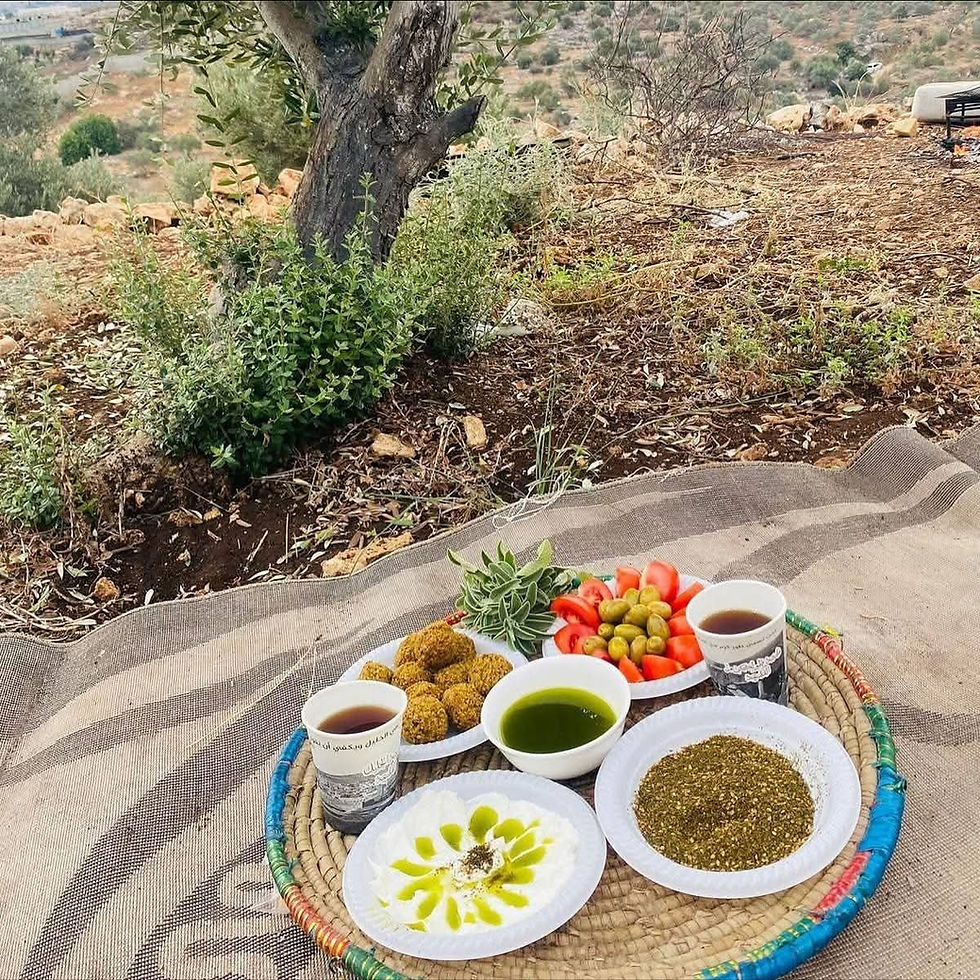
We continue making tenderness out of devastation.We continue opening our hearts and homes, inviting our communities to come and eat with us.
Living through Eid under occupation taught me that humanity is not measured by what is taken from us, but by what we refuse to let go of. By our insistence on holding onto joy, even when the world demands our despair. This Eid, I stand with my people at the checkpoints. I wait in the waiting, in the unknown, in the roads that bend through mountains just so we can reach the people we love. And now, far from home, I carry فلسطين inside me.I carry the fig tree. The orange fields of حيفا. The scent of the Mediterranean. The villages I have memorized through stories, even the ones I have never seen with my own eyes.
I close my eyes and dream of a different Eid. An Eid where no child waits at a checkpoint. Where no mother fears the sky. Where غزة breathes again.Where I never have to worry about my family! And I believe that day will come. Because the land remembers its people. And Palestinians, no matter how displaced, have always known how to return to one another.

What is your story?
@sadaa.echoes


Comments